
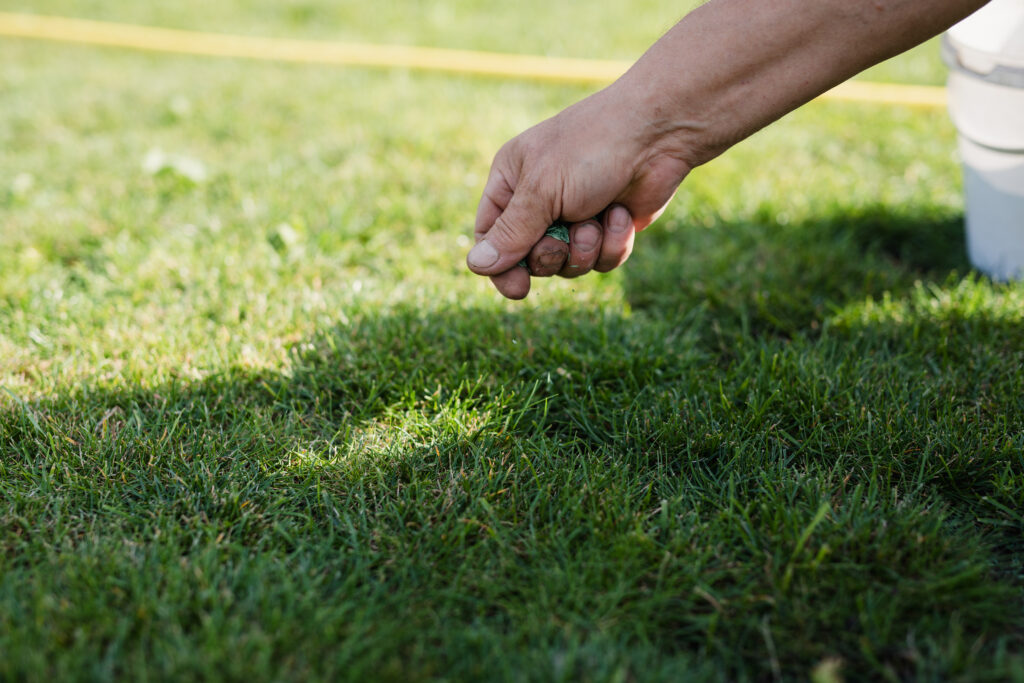
By late summer, commercial turf has usually been through months of heat, foot traffic, mowing, weeds, irrigation stress, and heavy use.
Some turf will recover naturally as temperatures cool. Other areas need help rebuilding density before winter.
That is where aeration and overseeding can make a major difference.
Aeration helps open compacted soil so air, water, and nutrients can reach the root zone. Overseeding adds new desirable grass plants into thin or weakened areas. Together, they help improve turf density, support root growth, and reduce the open space where weeds can take hold.
For property managers, the key is knowing when your property is showing signs that fall renovation should be part of the plan.
1. Your Turf Looks Thin After Summer
Thin turf is one of the clearest signs that your property may benefit from aeration and overseeding.
In spring, cool-season turf often looks full and green. But by late summer, weak areas become easier to see. Heat, humidity, drought cycles, traffic, and mowing stress can all reduce turf density.
Thin turf may show up near:
- Entrances
- Sidewalks
- Parking lot edges
- Courtyards
- Common areas
- Slopes
- High-traffic walking paths
When turf thins out, weeds have more room to move in. Overseeding helps fill those open areas with desirable grass before weeds take over.
2. Bare Spots Keep Coming Back
A few small bare spots may seem minor, but repeated bare areas usually point to an underlying issue.
Bare turf can be caused by:
- Soil compaction
- Poor irrigation coverage
- Heavy foot traffic
- Pest damage
- Disease
- Shade
- Construction disturbance
- Mower stress
- Heat from pavement
Aeration and overseeding can help repair many worn areas, especially when the cause is compacted soil or summer thinning. But the best results come when the underlying issue is also addressed.
For example, if bare spots are caused by poor irrigation coverage, seeding alone may fail. If the area is too shaded for turf, a landscape bed or groundcover may be a better long-term solution.
3. Water Runs Off Instead of Soaking In
When water runs across the turf instead of soaking into the soil, compaction may be part of the problem.
Compacted soil has fewer open spaces for air and water. Roots cannot grow deeply, water has trouble moving into the soil, and turf becomes more vulnerable to heat and drought.
Signs of compacted turf include:
- Hard soil
- Puddling
- Runoff
- Shallow roots
- Thin grass
- Moss or weeds
- Areas that dry out quickly after rain
Core aeration removes small plugs of soil, helping create channels for water, oxygen, and roots. This can be especially valuable on commercial properties where foot traffic, equipment, and repeated mowing patterns place pressure on the soil.
4. Weeds Are Filling In Weak Areas
Weeds are often a symptom of weak turf.
Crabgrass, broadleaf weeds, clover, goosegrass, nutsedge, and other weeds are more likely to appear where turf is thin, stressed, compacted, or cut too short.
Spraying weeds may reduce the visible problem, but it does not automatically fix the reason weeds appeared.
If weeds are growing because turf density is poor, the long-term solution often includes:
- Improving mowing practices
- Correcting soil conditions
- Managing irrigation
- Aerating compacted areas
- Overseeding thin turf
- Following a seasonally appropriate maintenance program
A dense stand of turf is one of the best defenses against future weed pressure.
5. The Same Areas Struggle Every Year
Some areas decline year after year no matter how much they are watered, fertilized, or treated.
Recurring weak spots are worth a closer look.
They may be caused by:
- Heavy shade
- Tree root competition
- Poor drainage
- Compacted soil
- Irrigation imbalance
- Heat from pavement
- Repeated foot traffic
- Poor soil quality
- Salt exposure from winter service
Aeration and overseeding may be part of the solution, but repeated problem areas should be evaluated before work begins. In some cases, turf renovation is the right choice. In others, the better solution may be soil correction, irrigation repair, traffic control, drainage improvement, or converting the area to a different landscape treatment.
Why Fall Is the Right Time
Late summer through fall is usually the strongest window for aeration and overseeding cool-season turf.
The timing works because:
- Soil is still warm enough for seed germination
- Air temperatures begin to cool
- Summer weed pressure starts to decline
- Turf can build roots before winter
- New grass has time to establish before next summer
Waiting too long can reduce the time new seedlings have to develop before cold weather. Planning early helps property managers get on the schedule and prepare irrigation, seedbed, and site conditions before the work begins.
Aeration and Overseeding Are Not a One-Visit Fix
Aeration and overseeding can be very effective, but they are not magic.
New seed still needs proper moisture, mowing, sunlight, and time. The site also needs to be managed after service so seedlings can establish.
For best results, property managers should plan for:
- Irrigation adjustments
- Traffic control where needed
- Proper mowing timing
- Follow-up monitoring
- Weed control timing that does not interfere with seed
- Soil testing or fertility planning when appropriate
The goal is not just to make the property look better for a few weeks. The goal is to rebuild stronger turf that can handle the next growing season.
Plan Fall Turf Recovery Before the Schedule Fills Up
If your property has thin turf, bare spots, compacted soil, weed pressure, or recurring weak areas, fall aeration and overseeding may be worth adding to your seasonal plan.
A late-summer property evaluation can help determine which areas need renovation, what needs to be corrected first, and how to give new seed the best chance to establish.
Seeing thin or worn turf on your commercial property? Schedule fall aeration and overseeding before the prime seasonal window fills up.